
How Nobel Prize-winning Bruins changed the world
The Nobel Prize recognizes the world’s most celebrated innovators. Winners form a select group of leaders whose discoveries have left a lasting mark on humanity – and that group includes nine UCLA alumni.
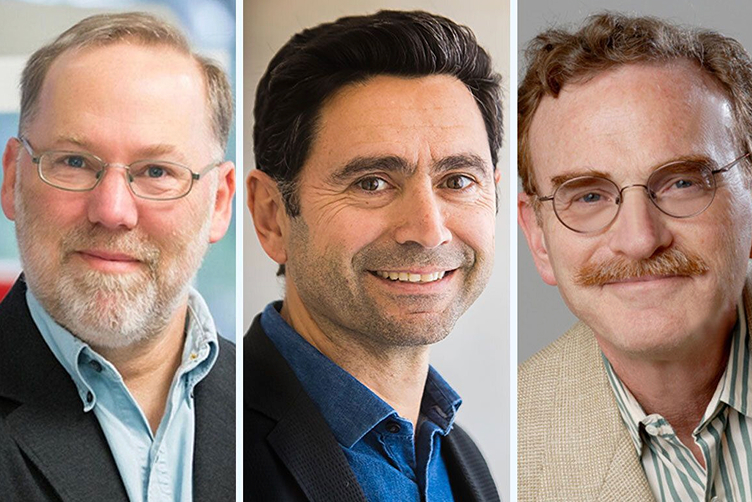
The most recent of these winners is Frederick J. “Fred” Ramsdell, whose groundbreaking discoveries in biotechnology earned him the 2025 Nobel Prize in physiology or medicine on October 6. Ramsdell’s research, supported by the National Institutes of Health since the 1940s, examined how the human immune system prevents immune cells from attacking the body’s own tissues. His findings could lead to new treatments for autoimmune diseases including arthritis, multiple sclerosis and Crohn’s disease.
“That’s an example of the government investing in basic science in the 1940s, and it eventually led not just to this Nobel Prize but to clinical trials right now with patients with disease to see if we can make them better,” Ramsdell said. “The idea of those long-term investments being eliminated or downgraded is a very shortsighted way to think about science.” Ramsdell has benefited from national funding – as has society. And he is far from the only example.
Nobel laureate Ardem Patapoutian emigrated from war-torn Beirut in 1986 at just 18 years old before attending UCLA, where he was inspired by the university’s commitment to research. Patapoutian was driven to pursue his interests after working in a federally funded lab. “This country gave me a chance with a great education and support for basic research,” Patapoutian said upon receiving the Nobel Prize in 2021. His NIH-funded findings explored how temperature and touch are converted into electrical impulses in the nervous system, and are now being used to address a range of diseases. Without federal funding, he likely would not have reached this milestone. Neither would Randy Schekman, the first UCLA alumnus to win the Nobel Prize in physiology or medicine.
Schekman, who won in 2013, credited the affordability of his education with supporting his breakthroughs in molecular biology. “UCLA changed my life,” said Schekman, whose federally funded research uncovered how human cells organize their transport systems – discoveries that provide key insights into neurological diseases, diabetes and immunological disorders. His interest in the subject stemmed from the hands-on research he did in his first-year chemistry lab. “Labs that close down won’t be able to support their undergraduate researchers,” Schekman said, emphasizing the need for government investment in universities like UCLA. Stories like these are a reminder of how federal funding for research can change the world.