
Sowing seeds for the future: UCLA’s Victoria Sork uses genetics to combat climate change
A UCLA professor is investigating why California’s oak populations are declining — and the answer might lie in their DNA.
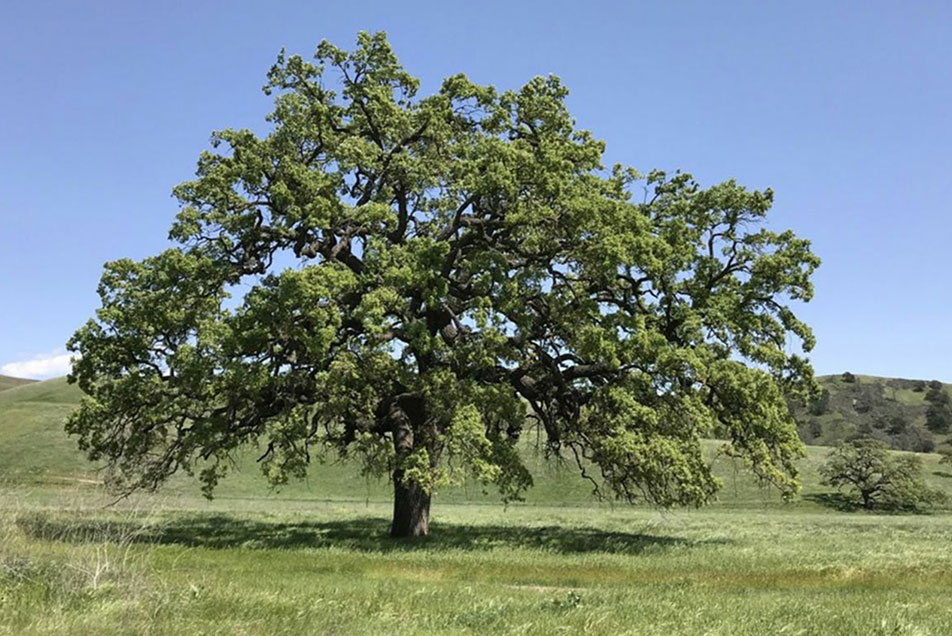
Victoria Sork studies how tree populations respond to climate change. She is particularly interested in California’s signature valley oaks — the largest oaks in North America — and, like all oaks, a keystone species that supports biodiversity of all kinds. As the effects of climate change intensify, these iconic trees have become increasingly sparse even in their native habitat. Sork has been developing genomic (the study of an organism’s entire DNA set) tools to address this crisis and help the species adapt to a rapidly changing environment.
Sork, a distinguished professor of ecology and evolutionary biology, directs the UCLA Mathias Botanical Garden and is a member of the UCLA Institute of the Environment and Sustainability. Her lab studies oaks at every scale, from molecules to forests, including the ecological and evolutionary processes that shape the genetic makeup of trees and their ability to withstand climate change.
A recipient of the 2020 Molecular Ecology prize, Sork pioneered the study of landscape genetics. This field combines evolutionary biology, conservation and genomics.
“Genomics is the missing link between laboratory science and effective land management,” Sork said. “By mapping the patterns of genetic variation underlying how different populations respond to heat and drought, my research team provides the scientific framework for the strategic movement of climate-resilient seeds to new areas.”
Her work on multiple tree species has made a strong contribution to the UCLA California Conservation Genomics Project. The $10 million statewide initiative provides data to help state officials protect biodiversity, respond to catastrophic weather events and build climate resilience. The project analyzed the genetic material of endangered species to understand which adaptations make certain plants and animals more vulnerable to climate change.
Sork also forged key collaborations that translate her 20 years of research into actions. As part of a 15-year collaboration she established with the U.S. Forest Service, Sork led research into whether the trees replanted in the wake of California’s wildfires could survive rising temperatures. She discovered that many valley oaks are poorly adapted to shifting climate conditions, a finding that helps explain why these trees have struggled with long-term survival.
More recently, Sork and her research team partnered with The Nature Conservancy on a series of studies that analyzed the entire genetic code of hundreds of oak trees to identify the specific genes that help them thrive in warmer climates. Acorns with these gene variations have already been planted in Nature Conservancy preserves.
“We have to plant seeds for the future, with the climate-adapted genetic variation to help them survive,” Sork said.
With over $5 million in research funding from the National Science Foundation, Sork’s research is among the first to merge advanced genetics with environmental policy. Her work is already being put into practical use across California, helping shape restoration efforts and reimagine conservation strategies so that these iconic trees and many other species survive for generations to come.