
Treating muscular dystrophy
The research of UCLA professor Rachelle Crosbie, an internationally recognized leader in muscle biology, is reshaping how scientists think about treating muscular dystrophy.
Crosbie is professor and chair of the Department of Integrative Biology and Physiology, with a secondary appointment in neurology at the David Geffen School of Medicine.
Her lab studies Duchenne muscular dystrophy and limb-girdle muscular dystrophies — devastating genetic diseases that cause progressive muscle degeneration, loss of mobility and ultimately cardiac and respiratory failure. Together, these conditions affect tens of thousands of individuals worldwide and currently have limited therapeutic options.
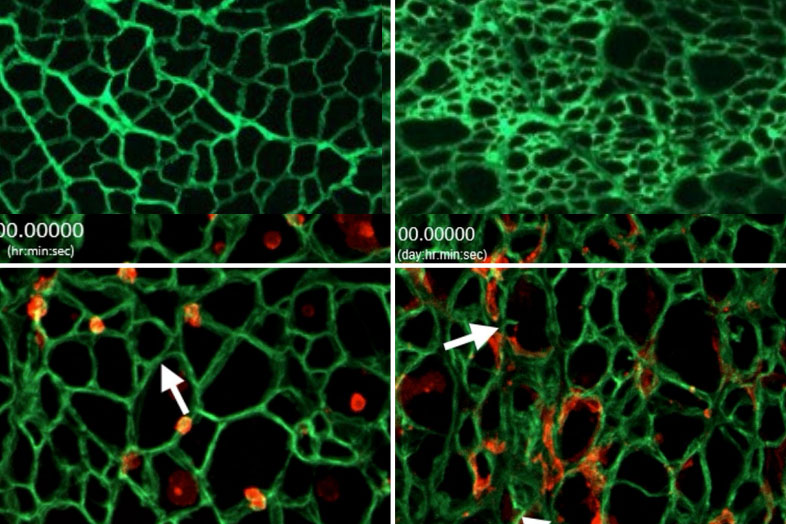
A major breakthrough from Crosbie’s laboratory was the identification of sarcospan, a type of protein that strengthens and stabilizes muscle cell membranes. Her work showed that enhancing sarcospan levels can significantly improve muscle function and protect muscle tissue in models of Duchenne muscular dystrophy and specific forms of limb-girdle muscular dystrophy. These discoveries helped shift the field toward a new therapeutic concept: that reinforcing the muscle membrane itself can slow disease progression and preserve function across multiple muscular dystrophies.
Today, Crosbie’s research is focused on translating these findings into therapies. Her lab is advancing gene-based and pharmaceutical approaches designed to enhance muscle resilience by stabilizing the cell membrane — a core defect shared by many muscular dystrophies.
As part of this translational effort, Crosbie, co-founded the biotechnology startup Pagoda Bio, which is dedicated to developing therapies centered on biological resilience. Named after the pagoda tree — known for its deep roots and ability to withstand environmental stress — Pagoda Bio focuses on treatments that reinforce muscle integrity from within. By leveraging sarcospan-based mechanisms, the company aims to help muscle cells better endure mechanical stress and resist degeneration.
“Muscular dystrophy has long been framed as a story of loss,” Crosbie said. “Our work asks a different question: how do muscle cells build resilience, and how can we strengthen that capacity to protect function over time?”
In parallel with her research, Crosbie is deeply committed to education and mentorship. She has developed innovative courses that connect cutting-edge biomedical research with patient experience, and she trains students and scientists across career stages in translational muscle biology. Her leadership and dedication to teaching have earned her UCLA’s Chancellor’s Distinguished Teaching Award and the Life Sciences Faculty Excellence Award for Education Innovation.
Through her research, teaching and entrepreneurial leadership, Crosbie is helping to drive a new generation of therapies — and a new way of thinking — focused on resilience in human health.