
More sleep means better brain health
If you have a habit of sleeping through your alarm, UCLA scientists have good news for you. Hitting the snooze button – or at least getting enough sleep – might actually be essential for brain function.
A UCLA-led team of researchers discovered a dramatic shift in the primary function of sleep during early brain development. Before age 2 1/2, the brain grows very rapidly. During REM sleep, when vivid dreams occur, the young brain is busy building and strengthening synapses — the structures that connect neurons to one another and allow them to communicate.
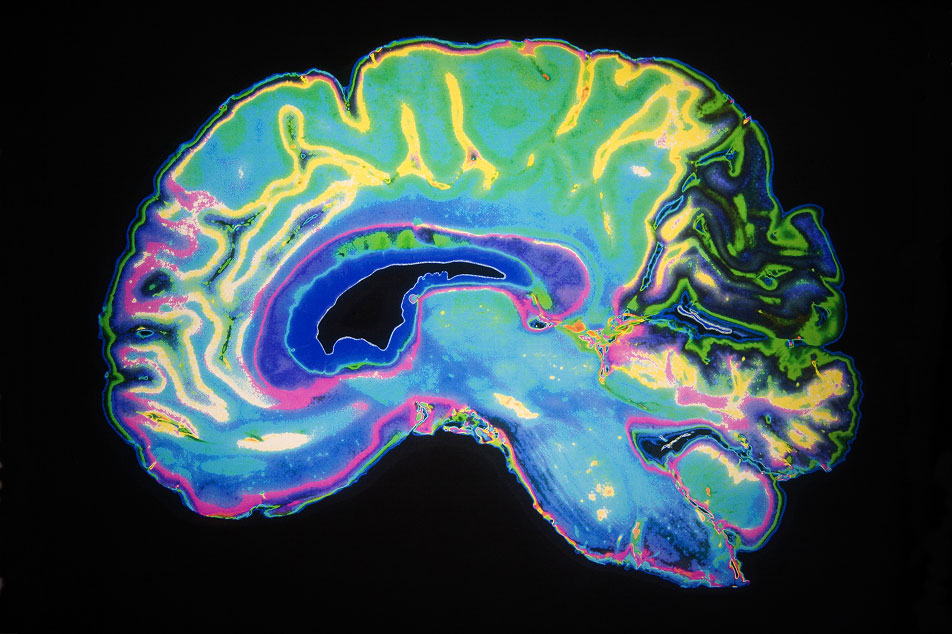
The team discovered that after about age 2 1/2, sleep’s primary role becomes maintenance and repair. Without this critical function, damaged genes and proteins within neurons can build up and cause serious illnesses.
“I was shocked how huge a change this is over a short period of time, and that this switch occurs when we’re so young,” said Van Savage, a UCLA professor of ecology and evolutionary biology and of computational medicine.
Savage is part of the research team that developed a mathematical model to explain how sleep changes with brain and body size. Drawing on expertise from a range of scientific fields, including neuroscience, biology, statistics and physics, the team analyzed data from more than 60 sleep studies, studying brain patterns in humans and other mammals.
The scientists found that from newborns through age 10, REM sleep drops from about 50% of sleep time to about 25%, and continues to decrease with age. Adults older than 50 spend about 15% of their sleep time in REM. Across all species included in the study, this significant dropoff in REM sleep consistently occurred when they reached the human developmental equivalent of about 2 1/2 years of age.
“Sleep is as important as food,” senior study author Gina Poe said. “And it’s miraculous how well sleep matches the needs of our nervous system. From jellyfish to birds to whales, everyone sleeps. While we sleep, our brains are not resting.”
A chronic lack of sleep can have serious consequences, likely contributing to dementia, diabetes, obesity and other cognitive disorders. Most adults need about 7 1/2 hours of sleep per night, according to Poe, who also serves as the director of UCLA’s Brain Research Institute and has studied sleep for more than 30 years. Her work, along with studies like this one, provides critical insight into brain health , and is made possible with federal funding.